
- 2023: A widely cited analysis reported event planning as the third-most stressful job in the world, behind military service and home health aide roles.
- 2023: An industry report found 79% of event professionals say their roles are more stressful today than before the pandemic.
- PCMA survey (2022): Among 399 planners and 181 suppliers, large majorities reported exhaustion, negative attitudes toward work, and declining effectiveness; work-life balance topped the list of burnout drivers.
So if you’ve ever thought, “Why does it feel like I’m holding the universe together with caffeine and spreadsheets?” …it’s because you actually are.
The Chaos Nobody Sees
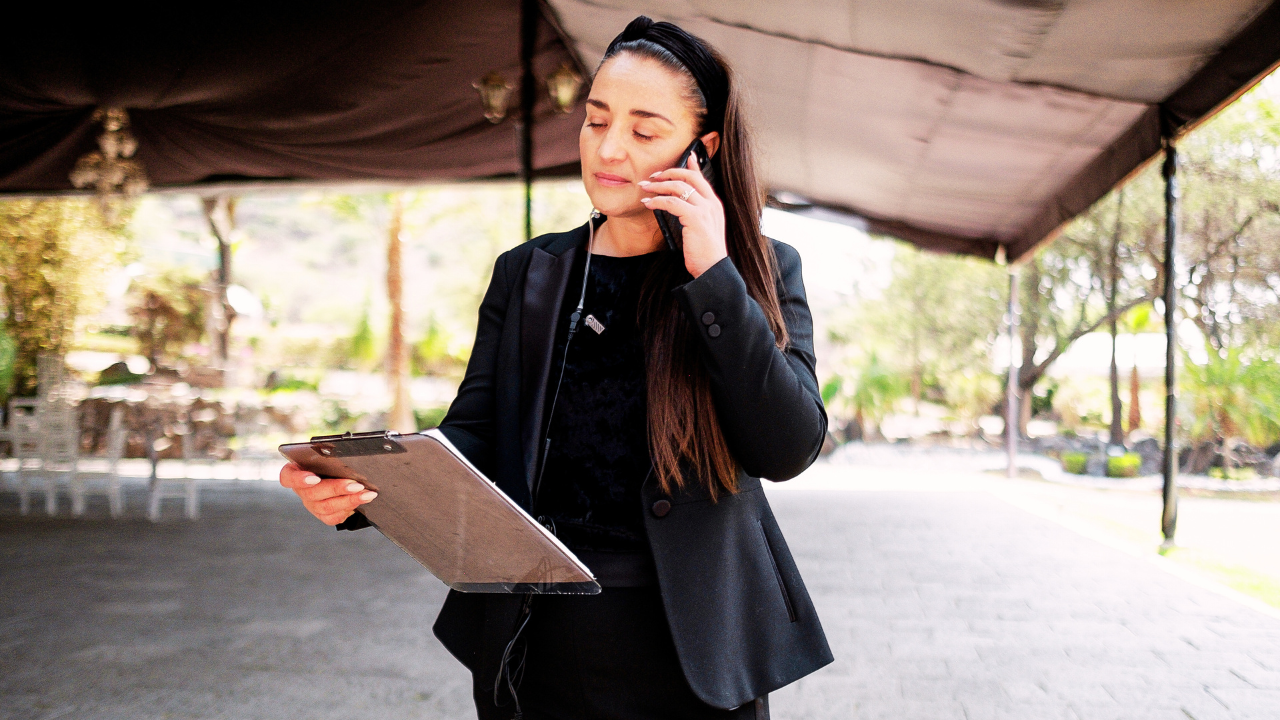
To outsiders, a flawlessly executed event looks effortless. Smooth. Polished. Seamless. But behind the scenes? It’s like performing open-heart surgery during an earthquake while smiling and wearing a headset.
- Fire alarms
- Last-minute agenda changes
- Speakers getting lost or making requests not in the contract
- AV hiccups
- VIP meltdowns
I’ve lived it from every side — as a performer, a speaker, an attendee who knows too much, and as someone who’s sat in your chair helping run events.
My First Taste of Corporate Event Chaos
It started when I was 18. I had just finished my first semester of college when I flew to Dallas to perform at my first corporate event as a drummer with The Hip Pickles. The client was Pharmacia & Upjohn.
That morning, I learned about 5 a.m. ballrooms, the magic of AV checks, and the unique talent planners have for managing ten crises at once while saying, “Everything’s great!” Also: the smell of bacon backstage — more than I’d seen in my life.
In 2011, I became a motivational speaker and saw a different side: speakers not showing up, agenda changes minutes before showtime, vendor spats, and fire alarms mid-keynote.
I also joined planning teams, including helping the Rotary Club of Wall Street, New York, with the first Haiti Entrepreneurship Camp. And for the record: we speakers can be a pain in the butt. I’m sorry. We mean well.
That’s why I joined Meeting Professionals International (MPI) — to give back to the people who truly built my career. If you’re one of them, this article is for you.
My Journey Navigating Event Planning Stress (As a Speaker Who’s Seen It All)
One of the most important lessons I ever learned about event planning didn’t come from a conference or a business book — it came from my drum teacher, Drori Mondlak, years ago in Midtown Manhattan.
I was early for my lesson, sitting alone in a practice room with a closed door — no window. I was feeling good, warming up on the drum kit, excited to show him the progress I had made that week.
To my left was my cell phone. And like so many of us do, I would glance at it here and there between rhythms. I was still keeping the beat steady — I could play and scroll at the same time — so it didn’t feel like a big deal. Half the time, I was reading random comments on social media while still drumming.
A few minutes later, Drori walked in with a frustrated look on his face.
I immediately froze. “Did it sound bad?” I asked.
He shook his head. “No, it sounded good.”
“Then why do you look upset?”
“Because I was listening from behind the door… and I could tell you weren’t fully present.”
He sat me down and talked about the energy I bring into any situation. He told me that more than skill, more than execution, presence is what people feel. And that is what sets the tone.
For the next few weeks, I did my best to apply what he told me — to show up fully, with intention, not distraction. And something incredible happened: I started having some of the best performances of my life. I got hired more. People responded differently. All because I brought better energy.
And there’s a lesson here for you — the event planner. Yes, your logistics matter. Yes, execution matters. But at the end of the day, you set the energy for the room — long before anyone walks in.
You are not just coordinating. You are calibrating.
You are not just planning. You are conducting.
So let this be a reminder: bring your full presence, bring grounded energy — because everyone else will tune themselves to you.
Real Stress Relief for Event Planners: Your Most-Asked Questions, Answered
How do I stay calm when everything is going wrong at once?
You don’t wait for chaos to practice calm. Calm is a skill you build in advance. Use daily micro-rituals:
- 4-7-8 Breathing: Inhale 4s, hold 7s, exhale 8s — instant reset.
- Hand-on-Heart Check-In: Ask yourself:
- What am I feeling specifically?
- Where do I feel it in my body?
- What do I need right now?
What quick stress-relief exercises can I do between sessions — without looking weird?
- Box Breathing: Inhale 4 / hold 4 / exhale 4 / hold 4.
- Shoulder Roll Reset: Roll up-back-down 5×.
- Grip Release: Clench fists for 5 seconds, release — triggers parasympathetic calm.
How do I recharge without abandoning my responsibilities?
Communication is the hack. Don’t disappear — announce your boundaries:
“I’m stepping away for five minutes. If it’s urgent, text me. If not, I’ll be right back.”
How do I set boundaries with demanding clients without losing the contract?
They’re not always rude — they’re scared. Lend them your calm, then use the Acknowledge → Decline → Alternative script:
“I understand you want X. Unfortunately, we can’t do that right now. What I can offer is Y.”
Why do I feel guilty when I take time off — and how do I stop?
Because you might be addicted to adrenaline, stillness feels strange at first. Start small. Take an hour. See that nothing burns down. Expand from there.
What should I do when I feel like I’m going to scream or cry mid-event?
Excuse yourself. Find a private space (bathroom, service hallway, outside). Let the emotion move through — breathe, shake, cry if needed. Then reset and return.
How do I bounce back after a meltdown with a vendor, speaker, or coworker?
Create a reset ritual:
- Step away.
- Breathe/stretch/reset.
- Ask: “What energy do I want to bring back?”
Conflict is human. Recovery is leadership.
How do I organize my to-do list when everything is urgent?
Urgency is fluid. Pause → Re-prioritize → Proceed. Do three 2-minute priority huddles with yourself throughout the day.
What tasks should I delegate — and how do I trust it’ll be done right?
Trust is built with systems:
- Write SOPs and checklists.
- Delegate using: What → Why → Deadline → “Done Right” → Questions.
Most “bad delegation” is unclear instructions, not incompetent people.
What’s a good script for saying no professionally?
Use the Yes → No → Yes formula:
“I understand you want X (Yes to the need). Unfortunately, we can’t do that today (No to the request). What we can do is Y (Yes to an alternative).”
How do I calm down an upset attendee without absorbing their emotions?
You’re not a sponge; you’re a mirror. Speak softly and ask open questions:
- “Help me understand what happened.”
- “What would make this better for you right now?”
Offer solutions — not apologies you don’t mean.
What do I say when a VIP is angry and I don’t have a solution yet?
“I understand your concern. Here’s what I can do right now: I’ll get you a clear update by __time__.”
They don’t need perfection — they need certainty.
Final Thought
As I wrote this, a theme emerged: pause, breathe, say no when needed, and stop taking everything personally.
You don’t need more hustle. You need more self-care, not as a luxury, but as a professional requirement.
There’s no perfect event — only well-managed chaos. And you are one of the world’s unsung chaos alchemists.
You’re not just planning events. You’re holding space for belonging, transformation, and love. The world needs that — and it needs you.
Learn More: Programs & Presentations
Want a practical, high-energy keynote or workshop on staying calm in the chaos? I customize for your audience and leave them with tools they can use immediately.
References
- PCMA. “Event Planning: The Third-Most Stressful Job in the World.” Summarizes World Scholarship Vault’s 2023 ranking. :contentReference[oaicite:0]{index=0}
- IBTM World / Culture Creators (coverage). “Event Planning Gets Even More Stressful Post-Pandemic.” Reports that 79% of event professionals find their roles more stressful than pre-pandemic. :contentReference[oaicite:1]{index=1}
- PCMA Convene COVID-19 Recovery Dashboard. “Mental Health and the Business Events Industry” (and linked Dashboard PDF): 399 planners, 181 suppliers; exhaustion, negativity, reduced effectiveness; work-life balance as top burnout factor. :contentReference[oaicite:2]{index=2}
- CareerCast. “Most Stressful Jobs (2019).” Event Coordinator ranked #6 most stressful job in the U.S. (historical context). :contentReference[oaicite:3]{index=3}
- MeetingsNet. “Planners at Their Breaking Point.” 36% stressed or frustrated every day; additional burnout indicators. :contentReference[oaicite:4]{index=4}
- IBTM World (direct). “Events Under Pressure in a Work-from-Home Culture.” Notes the 79% stress-increase stat from The Culture Creators Report (2023). :contentReference[oaicite:5]{index=5}
Note: Some sources summarize or report on primary surveys (e.g., IBTM’s Culture Creators Report and PCMA’s Dashboard). Where possible, both the summary article and the originating survey/document are linked.
